Commission Cycle — Build, Scale & Compound Affiliate Commissions With Mark Ling’s Proven System
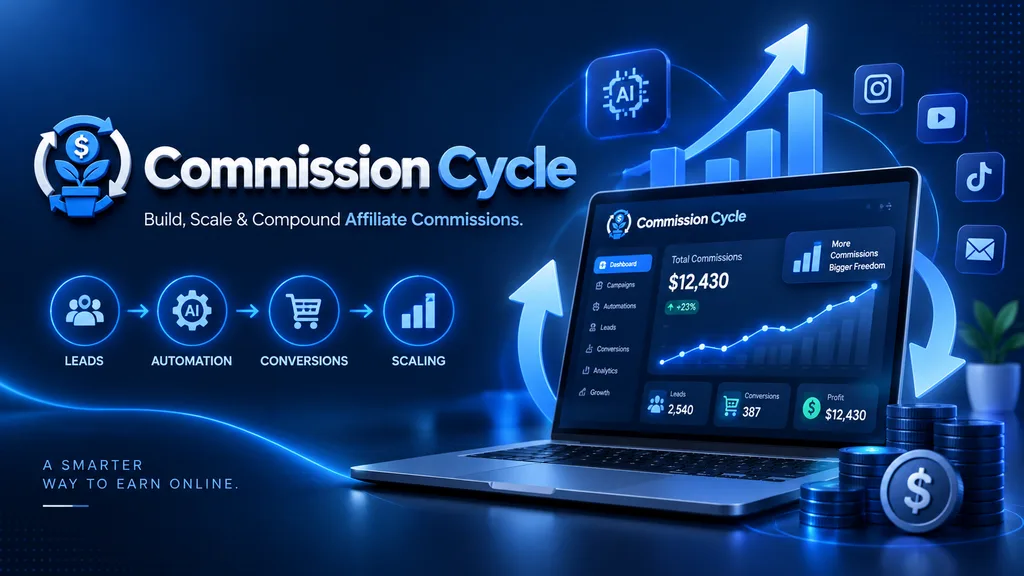
Turn social media attention into leads, automated conversations, affiliate sales, and a repeatable profit cycle — using Mark Ling’s Commission Cycle methodology, AI-assisted tools, and step-by-step mentorship.
Commission Cycle is designed for affiliate marketers who want more than another collection of random traffic tactics.
Instead of constantly chasing the newest platform, trend, or “secret strategy,” the system focuses on something more durable: building a process that attracts prospects, converts them into customers, increases the value of each customer, and then reinvests part of the profits to grow the business again.
That is the idea behind Commission Cycle.
The program combines social-media traffic, automated direct messages, affiliate funnels, AI-assisted content creation, selected offers, and a reinvestment strategy built around four core profit levers.
Independent site notice: CommissionCircle.org is not the official Commission Cycle website and is not operated by Mark Ling or the Commission Cycle team.
Commission Cycle at a Glance
| Program Detail | Information |
|---|---|
| Program | Commission Cycle |
| Creator | Mark Ling |
| Training Type | Affiliate marketing mentorship |
| Core Program | 8 weeks |
| Primary Traffic Sources | Instagram and YouTube |
| Core Strategy | Social engagement → leads → affiliate sales → reinvestment |
| AI Tools | Content, funnels, research, scripts, videos and marketing assistance |
| Main Niches | Personal development and internet marketing |
| Current Price | $2,497 |
| Payment Plan | 6 payments of $497 |
| Support | Up to one year under the current offer |
| Guarantee | 30 days, subject to current terms |
Commission Cycle is not simply about generating a few affiliate commissions.
The larger objective is to create a business that can use its own profits to generate further growth.
In simple terms:
Get attention → generate leads → make sales → reinvest profit → improve the system → repeat.
That repeating process is the foundation of the Commission Cycle model.
What Is Commission Cycle?
Commission Cycle is Mark Ling’s affiliate marketing mentorship program built around social-media traffic, automation, affiliate offers and systematic scaling.
The strategy begins with a relatively simple question:
How can a marketer turn ordinary social-media engagement into a sales opportunity?
One of the methods taught is built around one-word replies.
Imagine someone sees a short video about productivity, confidence, relationships, business, mindset or another personal-development topic.
Instead of immediately asking that viewer to purchase something, the post might ask:
“Comment GUIDE and I’ll send you the free resource.”
That small action creates engagement.
It can also start a direct-message conversation.
From there, automation can deliver the promised resource and guide the prospect toward additional content, a presell page or an affiliate offer.
The funnel may look something like this:
Social Post → Comment → Automated DM → Free Resource → Presell Content → Affiliate Offer
Here’s what most people don’t know: the comment itself isn’t the business.
It is simply the doorway.
The real value comes from what happens afterward.
Commission Cycle attempts to connect those small interactions to a larger marketing system.
How the Commission Cycle System Works
Many affiliate marketers make the same mistake.
They focus almost entirely on traffic.
More visitors. More views. More followers.
But traffic is only one part of the equation.
Mark Ling’s Commission Cycle methodology focuses on four fundamental profit levers:
Leads × Conversions × Average Revenue per Sale × Average Number of Sales per Customer
Each lever can potentially increase total profit.
Let me explain.
Suppose a campaign generates:
- 1,000 leads;
- a 2% conversion rate;
- $100 commission per sale;
- one average sale per customer.
That would produce:
20 sales × $100 = $2,000 in commissions.
A beginner might immediately try to double traffic.
But that may not be the cheapest way to increase profit.
What if improving the funnel raises the conversion rate from 2% to 3%?
The same 1,000 leads now produce:
30 sales × $100 = $3,000.
No additional traffic was required.
Or perhaps the campaign can introduce an additional relevant offer to existing customers.
That increases average customer value.
Commission Cycle teaches participants to look at all four levers rather than assuming that traffic is always the answer.
The Four Profit Levers Behind Commission Cycle
1. Generate More Leads
A business needs a steady stream of potential customers.
Commission Cycle emphasizes social-media platforms such as:
- Instagram;
- YouTube;
- short-form video;
- shareable resources;
- automated social interactions.
Organic content can become an entry point into the funnel without requiring an existing email list.
One useful aspect of this model is that social platforms can expose content to people who do not already follow the creator.
That creates the possibility of reaching new prospects without having to build an audience entirely from scratch first.
2. Improve Conversion Rates
A thousand visitors who take no action are less valuable than one hundred highly relevant prospects who move through a well-built funnel.
Commission Cycle therefore goes beyond traffic.
The system also focuses on:
- presell pages;
- free reports;
- quizzes;
- automated messaging;
- follow-up sequences;
- affiliate offers.
The goal is to create a smoother path from initial interest to purchase.
To be honest, this is where many affiliate campaigns fall apart.
The marketer spends days attracting attention and then sends that attention directly to a generic sales page.
Commission Cycle tries to add context before the offer.
That can make the transition feel more natural.
3. Increase Revenue per Sale
Not all affiliate products are equal.
Some generate small commissions.
Others may produce significantly larger payouts.
Commission Cycle includes guidance around products Mark Ling believes fit the methodology.
The intention is to reduce the amount of time students spend endlessly browsing affiliate marketplaces.
But there is an important point here.
A higher commission does not automatically mean a better product to promote.
The offer must still match the audience.
A $1,000 commission means very little if nobody wants the product.
Relevance comes first.
4. Increase Customer Value
One customer does not always need to mean one commission.
Someone interested in one personal-development product may also be interested in another relevant solution later.
This is where Commission Cycle’s Crossover Play becomes important.
The strategy is designed to move the appropriate portion of an audience toward another related funnel or higher-value opportunity.
That can increase revenue without requiring the marketer to acquire an entirely new prospect each time.
Why It Is Called “Commission Cycle”
The name becomes easier to understand once the four levers are clear.
Imagine earning $1,000 in affiliate commissions.
Instead of spending all of it, a portion can be reinvested into the business.
Perhaps the current bottleneck is traffic.
Money goes toward traffic.
Maybe traffic is already strong but the funnel converts poorly.
The investment could go toward improving the funnel.
Perhaps both traffic and conversion are working, but customers only purchase once.
Then improving customer value may become the priority.
The process becomes:
Commission → Reinvestment → Improvement → More Commission → Reinvestment
And around it goes.
That is the cycle.
The concept is simple, but that simplicity is actually one of its strengths.
Traffic sources change.
Business economics change far less.
Commission Cycle Uses AI to Reduce the Heavy Lifting
AI is deeply integrated into the current Commission Cycle offer.
But it is worth separating useful automation from exaggerated promises.
AI does not magically create a profitable affiliate business.
What it can do is remove a large amount of repetitive production work.
Commission Cycle includes AI-assisted tools for areas such as:
- marketing research;
- content ideas;
- video scripts;
- social posts;
- funnel content;
- images;
- video creation;
- quiz pages;
- presell pages;
- downloadable reports;
- email sequences;
- marketing feedback.
This matters because affiliate marketing can involve a surprising amount of content.
A marketer may need to research a topic, develop an angle, write a script, create social content, produce visuals, build a lead magnet and write follow-up messages.
Doing all of that manually can consume hours.
AI can compress much of the first-draft work.
The marketer can then spend more time improving the message, studying performance and making strategic decisions.
That is a much more realistic use of AI.
What’s Included in Commission Cycle?
Commission Cycle is positioned as an 8-week mentorship program with training, tools, live support and implementation resources.
One-Word Reply Strategy
This is one of the core traffic methods.
A social post asks viewers to respond with a simple word.
Automation can then deliver a resource through direct messages.
The approach reduces friction because the viewer isn’t being asked to make a large commitment immediately.
Example
A post might say:
“Comment PLAN and I’ll send you the checklist.”
The user comments.
Automation sends the checklist.
The prospect enters the funnel.
Simple on the surface.
More sophisticated underneath.
AI-Built Funnel Assets
Commission Cycle includes tools intended to help students create:
- quiz funnels;
- presell pages;
- downloadable reports;
- email campaigns;
- promotional content.
That may be particularly useful for people who struggle with writing or funnel creation.
Instead of staring at a blank page, the user starts with AI-generated material and refines it.
Faceless Video Strategy
Not everyone wants to appear on camera.
Commission Cycle includes a method for creating videos using rights-cleared footage, captions and repeatable content frameworks.
That gives marketers another option.
They can build content around a topic rather than turning themselves into the public face of the campaign.
Automated DM Funnels
Automation plays an important role once content starts generating engagement.
Manually answering every comment and message may work with ten prospects.
It becomes much harder with hundreds.
The system therefore uses automated messaging to:
- respond to interest;
- deliver resources;
- guide prospects;
- move people toward relevant offers.
The idea is to automate repetitive steps without eliminating the marketer’s strategic role.
Commission Cycle Crossover Play
The Crossover Play focuses on monetizing an existing audience more effectively.
Someone who purchases or engages with one offer may be suitable for another relevant product.
Instead of repeatedly paying to acquire entirely new prospects, the marketer can potentially generate more value from people already inside the ecosystem.
Relevance is critical.
The goal should not be to bombard customers with offers.
It should be to introduce the right next step when it genuinely makes sense.
Commissions Club
The current program includes live support through the Commissions Club.
Mark Ling can evaluate member funnels and marketing assets during these sessions.
This type of feedback can be useful because small details often make a large difference.
A campaign may not require a complete rebuild.
Sometimes the problem is simply:
- a weak hook;
- unclear messaging;
- poor offer alignment;
- confusing funnel flow;
- an ineffective call to action.
Direct feedback can help identify those issues faster.
60 Day Demo
Commission Cycle also includes a 60 Day Demo.
Mark Ling is expected to build a campaign from scratch and document how it develops over approximately sixty days.
Students can observe:
- account setup;
- campaign decisions;
- content development;
- adjustments;
- scaling decisions.
Watching the process unfold can be more useful than seeing only the final outcome.
Real campaigns rarely move in a perfectly straight line.
Charlie AI Coach
Another tool included with Commission Cycle is Charlie, an AI coaching assistant trained around the program.
Users can submit materials such as:
- pages;
- emails;
- scripts;
- promotional content.
Charlie can then provide guidance based on the Commission Cycle framework.
Think of it as an implementation assistant rather than a replacement for Mark Ling or the mentorship.
Which Markets Does Commission Cycle Focus On?
Commission Cycle primarily emphasizes two broad markets:
Personal Development
This includes areas such as:
- confidence;
- productivity;
- mindset;
- motivation;
- relationships;
- self-improvement;
- meditation;
- career development.
Personal development is a large market with many subcategories.
That gives marketers multiple angles to explore.
Internet Marketing
The second major area is the internet-marketing or make-money-online market.
This can include products related to:
- affiliate marketing;
- digital marketing;
- online business;
- traffic;
- funnels;
- AI tools;
- entrepreneurship.
Mark Ling teaches both markets because they form a large part of his own experience.
Who Created Commission Cycle?
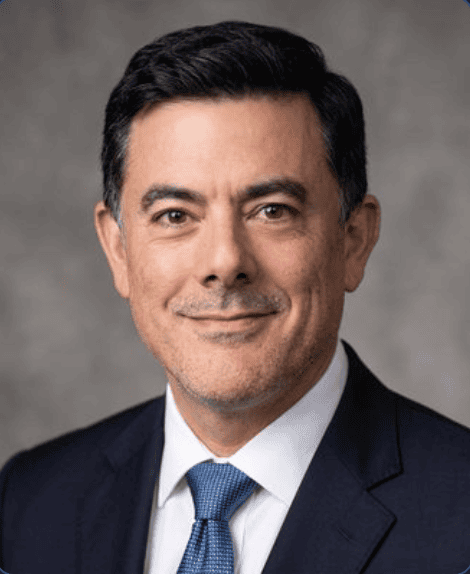
Commission Cycle was created by Mark Ling, an internet marketer whose online career dates back to approximately 1999.
During that time, traffic sources have changed repeatedly.
Early search engines.
Google.
Facebook.
YouTube.
Instagram.
Short-form video.
Yet Mark’s argument is that the underlying profit model remained broadly consistent.
Generate revenue.
Reinvest intelligently.
Improve the business.
Repeat.
The current promotional material also states that students Mark Ling has taught have collectively generated more than $400 million in ClickBank sales.
That figure should be understood as a historical aggregate claim relating to students across his broader training history.
It is not a typical earnings figure for an individual Commission Cycle participant.
Results in affiliate marketing can vary substantially.
How Much Does Commission Cycle Cost?
The current pay-in-full price is:
$2,497
A payment plan is also offered:
6 Monthly Payments of $497
That means:
$497 × 6 = $2,982
| Payment Option | Amount | Total |
|---|---|---|
| One-Time Payment | $2,497 | $2,497 |
| Monthly Plan | $497 × 6 | $2,982 |
| Additional Cost of Installments | — | $485 |
The payment plan lowers the initial cost but increases the total amount paid by $485.
Current prices, payment methods and bonuses may change, especially during promotional periods.
Commission Cycle Founding Member Bonuses
The current offer includes additional founding-member bonuses.
The 100K Campaign
This bonus is described as a multi-week promotional campaign based on sequences Mark Ling says he has used in his own affiliate promotions.
It includes materials such as:
- emails;
- posts;
- video ideas;
- bonus strategies;
- campaign scheduling;
- closeout content.
The “100K” label refers to Mark’s reported results from his own campaigns.
It should not be interpreted as an earnings promise for participants.
Snowball Profits LIVE
Another current bonus is Commission Cycle Snowball Profits LIVE, planned for Austin in January 2027.
The event is intended to cover topics such as:
- what’s working now;
- scaling;
- crossover strategies;
- higher-ticket opportunities;
- planning for 2027.
The current offer also indicates that recordings will be available to members who cannot attend.
Bonus availability may change, so check the current offer before relying on any specific bonus.
Commission Cycle 30-Day Guarantee
The current offer includes a 30-day guarantee.
The stated terms ask buyers to make an honest attempt to use the program and available support.
If a participant does so and decides the program is not suitable, the offer indicates that a refund can be requested within the stated guarantee period.
Always read the current terms before purchasing.
Do You Need an Email List?
No existing email list is presented as a requirement.
Commission Cycle is built so social media can generate the initial traffic.
However, students are also encouraged to build an email list over time.
That is sensible.
Social media gives reach.
Email provides a direct channel to an audience.
A useful way to think about it is:
Social media = rented attention
Email list = owned audience asset
A strong affiliate business can use both.
Does Commission Cycle Require Paid Advertising?
Not necessarily.
Organic social content can form the starting point.
Paid traffic may become part of the strategy later when the economics make sense.
That is important because the reinvestment model does not say:
“Always buy more traffic.”
It says:
invest where improvement is currently most valuable.
Sometimes that means ads.
Sometimes it means content.
Sometimes it means improving conversion.
Sometimes it means increasing customer value.
The Bigger Idea Behind Commission Cycle
Platforms come and go.
Algorithms change.
Traffic costs change.
AI tools change.
Marketing tactics change.
But the underlying economics of a business remain surprisingly stable.
A business still needs people.
Those people need to convert.
Transactions need value.
Customers may buy again.
Commission Cycle attempts to organize those fundamentals into a repeatable loop.
The social strategy generates attention.
Automation helps manage the response.
AI speeds up implementation.
Affiliate offers generate commissions.
Reinvestment is intended to create further growth.
That is the bigger idea.
Ready to Explore Commission Cycle?
Commission Cycle combines social-media marketing, affiliate offers, AI-assisted tools, automated messaging, funnel building and profit reinvestment inside one mentorship framework.
The promise is not simply:
“Get more traffic.”
The broader objective is:
build a system capable of improving itself with the commissions it produces.
For anyone considering the program, the important questions are practical ones.
Does the social-media strategy fit the way you want to market?
Are you prepared to create and test content?
Does the price fit your budget?
Are you comfortable promoting affiliate products in the niches being taught?
Do the mentorship, tools and support justify the investment for your situation?
Study the program carefully.
Review the current terms.
Understand the pricing.
Then make an informed decision.